Are you a healthcare professional?

This site is intended only for Healthcare Professionals who are interested in the management of gastric cancer and/or gastro-oesophageal junction cancers.

I AM NOT A HEALTHCARE PROFESSIONAL BUT WOULD LIKE MORE INFORMATION ON GASTRIC/GASTRO-OESOPHAGEAL JUNCTION CANCERS

This website is a educational scientific resource, funded and developed by Astellas Pharma Ltd.
MAT-PL-NON-2025-00052 | Wrzesień 2025

Laboratory setting with microscope and  computer monitor displaying a tissue sample — overlaid with an abstract white dot pattern

What is CLDN18.2?

Detecting CLDN18.2 expression identifies a previously undefined patient population in gastric or gastroesophageal junction (G/GEJ) adenocarcinoma.1

Abstract pattern of grey concentric circles

A predictive biomarker that may help you learn more about your patients with advanced G/GEJ cancer¹

  • Claudins are a family of transmembrane proteins.2,3
  • As a component of tight junctions, claudins are involved in the regulation of permeability, barrier function, and polarity of epithelial layers.2,3
  • The ESMO Clinical Practice Guidelines highlight that CLDN18.2 is a new predictive biomarker for patients with advanced gastric cancer.4

Claudins are present throughout the body, but 2 specific isoforms of CLDN18 are localised to certain tissue types5,6

CLDN18.1

Green lung icon

CLDN18.1 is the dominant isoform in normal and malignant lung tissue.

CLDN18.2

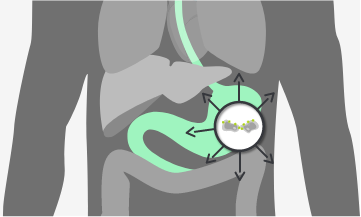
Green stomach icon

CLDN18.2 is the dominant isoform in normal gastric tissue and is often retained in malignant transformation.

Screengrab of Dr. Matteo Fassan video "What Is CLDN18.2?"
play-icon

What is CLDN18.2? All About Claudin 18.2 | CLDN18.2

Video Description Title

Video Description description

What is CLDN18.2? All About Claudin 18.2 | CLDN18.2

closeicon
volumeicon

What is CLDN18.2? All About Claudin 18.2 | CLDN18.2

closeicon

What is CLDN18.2? All About Claudin 18.2 | CLDN18.2

What Is CLDN18.2?

Matteo Fassan, MD, PhD

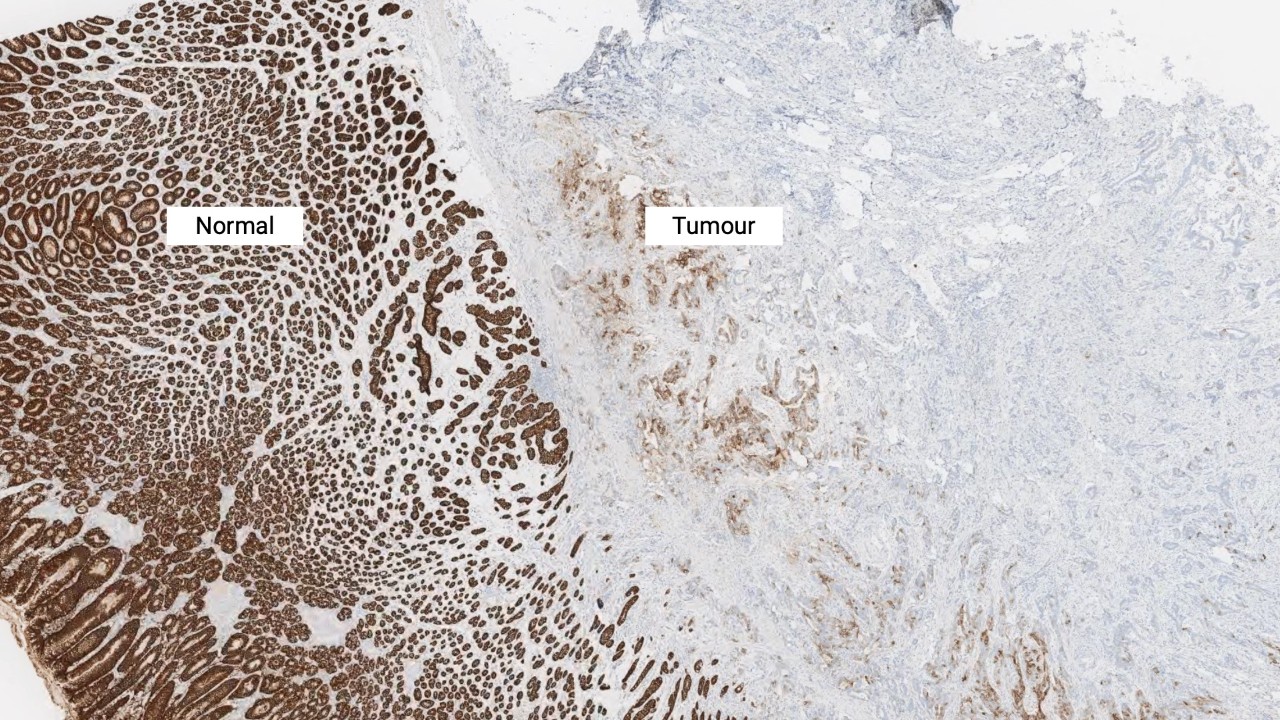
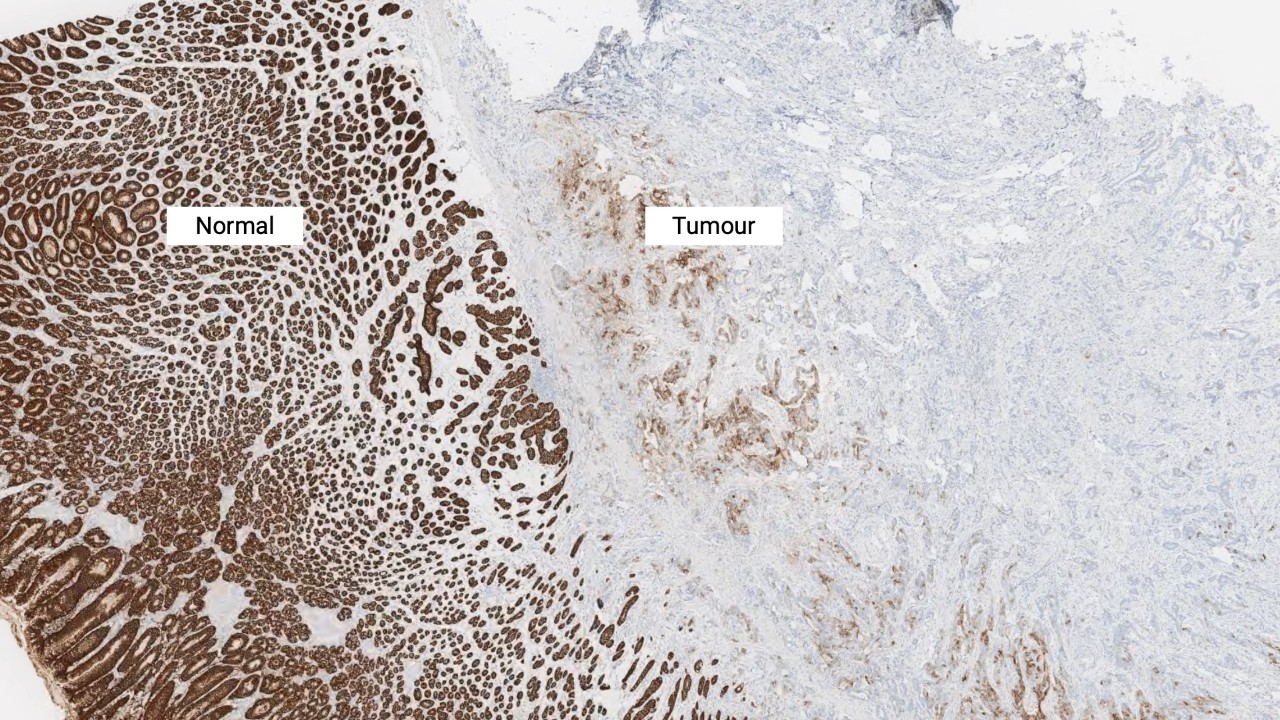
Normal and tumour cell CLDN18.2 staining at 2x magnification

Normal and tumour cell CLDN18 staining at 2x magnification.

Preclinical data have shown that CLDN18.2 may become more exposed as gastric tumours develop5,7

CONFINED IN HEALTHY TISSUE

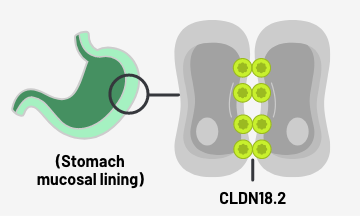
Normal gastric mucosa tissue with CLDN18.2 buried within tight junctions

In normal gastric mucosa, CLDN18.2 is typically buried within tight junctions.5,7

RETAINED AND EXPOSED IN MALIGNANT TRANSFORMATION

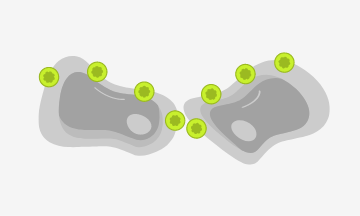
CLDN18.2 exposed due to cell polarity disruptions and structure loss

CLDN18.2 is often retained during malignant transformation. CLDN18.2 may be more exposed when cell polarity disruptions and structure loss occur.5,7,8

MAINTAINED IN METASTATIC PROGRESSION

CLDN18.2 expressed in lymph node metastases of gastric adenocarcinoma and other metastatic sites

CLDN18.2 may also be expressed in lymph node metastases of gastric adenocarcinoma as well as other distant metastatic sites.1,5,9,10

CLDN18.2 expression may be observed in gastric and gastroesophageal adenocarcinoma, as well as other adenocarcinomas.5

spiralbackground
section-graphic-image
Image of various grey circles on dark background
Detecting CLDN18.2 expression identifies a previously undefined patient population1

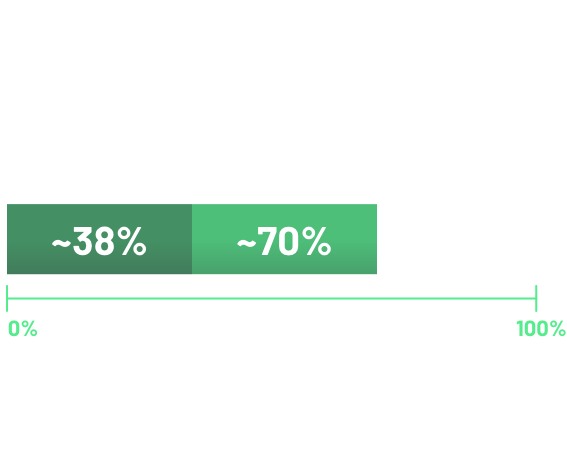
According to 2 recent global studies in patients with locally advanced unresectable or metastatic G/GEJ adenocarcinoma, ~38% of cases demonstrated ≥75% of tumour cells with moderate-to-strong (2+/3+) membranous CLDN18 staining.11,12
  • Among advanced G/GEJ biomarkers, CLDN18.2 is prevalent11-14
  • Detecting CLDN18.2 can be accomplished by standard IHC staining methods, as with many other biomarkers11,12,14,15
Graphic showing proportions of CDLN18.2 expression among all samples, and proportion of  samples with 75% of tumor cells expressing of 2+ and 3+ CDLN18.2 staining
Despite recent treatment advances, there are still critical needs to address
  • In 2022, over 6,000 new cases of stomach cancers were diagnosed in the United Kingdom, making it the United Kingdom’s 17th most diagnosed cancer17.
  • In 2022, over 4,000 people died in the United Kingdom due to stomach cancer, making it the 13th most deadly cancer in the United Kingdom17.


CLDN18.1, claudin 18 isoform 1; CLDN18.2, claudin 18 isoform 2; dMMR, deficient mismatch repair; ESMO, European Society for Medical Oncology; GCs, gastric cancers; GECs, gastroesophageal cancers; G/GEJ, gastric/gastroesophageal junction; HER2, human epidermal growth factor receptor-2; IHC, immunohistochemistry; PD-L1, programmed death ligand 1; TNM, tumour node metastases.


Image of combination of various light grey concentric and overlapping circles on light background

CLDN18.2 expression profile is similar across multiple histopathological parameters18

  • Between resection (37.6%) and biopsy (38.6%) samples of G/GEJ cancer
  • In gastric (39.9%) vs gastroesophageal junction (GEJ) (37.5%) cancer
  • Between proximal (44%) and distal (45.3%) locations in G/GEJ cancer

RESECTION OF GASTRIC CANCER

2x magnification of CLDN18-stained normal gastric epithelium and tumour cells.

2x magnification of CLDN18-stained normal gastric epithelium and tumour cells.

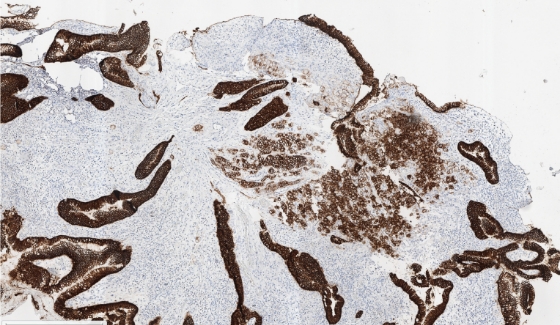
BIOPSY OF GASTRIC CANCER

stain-gastriccancer-5x

5x magnification of CLDN18-stained tumour sample with surrounding normal gastric glands.


CLDN18.2 is expressed consistently making it a reliable biomarker for G/GEJ cancer.9

Abstract pattern of grey concentric circles on dark background
High-level concordance between primary and metastatic samples

Data in patients with G/GEJ cancers suggest that CLDN18.2 expression demonstrated high concordance between primary and metastatic tumour samples.9

In a study of 523 primary G/GEJ adenocarcinomas and 135 pair-matched, synchronous modal metastases9:

86.7%
membranous staining concordance between matched primary and metastatic samples9
CLDN18.2 expression demonstrates intratumoural heterogeneity

As is the case with other biomarkers such as HER2, CLDN18.2 expression may demonstrate variability within a tumour, and this should be taken into account when sampling.9,19

In the same study that demonstrated high-level concordance between primary and metastatic samples, intratumoural heterogeneity in terms of CLDN18.2 expression was found in9:

  • 40.3%

    of primary GC tumours

  • 33.6%

    of primary GEC tumours

  • 28.8%

    of nodal metastases


CLDN, claudin; CLDN18.2, claudin 18 isoform 2; GC, gastric cancer; GEC, gastroesophageal cancer; G/GEJ, gastric/gastroesophageal junction; HER2, human epidermal growth factor receptor-2; IHC, immunohistochemistry; TMA, tissue microarray.

MatteoFassan
spirals_corner

Learn more about sample preparation and testing

Image of abstract pattern of concentric light grey circles on dark background

References: 1. Pellino A, Brignola S, Riello E, et al. J Pers Med 2021;11(11):1095. 2. Tsukita S, Tanaka H, Tamura A. Trends Biochem Sci 2019;44(2):141-52. 3. Hu YJ, Wang YD, Tan FQ, Yang WX. Mol Biol Rep 2013;40:6123-42. 4. Jasani B, Taniere P, Schildhaus HU, et al. Lab Invest 2024;104(1):100284. 5. Sahin U, Koslowski M, Dhaene K, et al. Clin Cancer Res 2008;14(23):7624-34. 6. Niimi T, Nagashima K, Ward JM, et al. Mol Cell Biol 2001;21(21):7380-90. 7. Sahin U, Schuler M, Richly H, et al. Eur J Cancer 2018;100:17-26. 8. Lamouille S, Xu J, Derynck R. Nat Rev Mol Cell Biol 2014;15(3):178–96. 9. Coati I, Lotz G, Fanelli GN, et al. Br J Cancer 2019;121(3):257-63. 10. Rohde C, Yamaguchi R, Mukhina S, Sahin U, Itoh K, Türeci O. Jpn J Clin Oncol 2019;49(9):870-6. 11. Shitara K, Lordick F, Bang YJ, et al. Lancet 2023;401(10389):1655-68. 12. Shah MA, Shitara K, Ajani JA, et al. Nat Med 2023;29(8):2133–2141. 13. Van Cutsem E, Bang YJ, Feng-yi F, et al. Gastric Cancer 2015;18:476-84. 14. Fuchs Cs, Ozguroglu M, Bang YJ, et al. Gastric Cancer 2022;25:197-206. 15. Abrahao-Machado LF, Scapulatempo-Neto C. World J Gastroenterol 2016;22(19):4619-25. 16. Kubota Y, Kawazoe A, Mishima S, et al. ESMO Open 2023;8(1):100762. 17. Global Cancer Observatory, International Agency for Research on Cancer 2022. https://gco.iarc.fr/today/explore. Accessed March 2024. 18. Shitara K, Xu R, Moran D, et al. Presented at the 2023 ASCO Annual Meeting; June 2-6, 2023; Chicago, IL, USA. 19. Grillo F, Fassan M, Sarocchi F, et al. World J Gastroenterol 2016;22(26):5879-87. 20. Referenced with permission from the NCCN Clinical Practice Guidelines in Oncology (NCCN Guidelines®) for Esophageal and Esophagogastric Junction Cancers V.2.2023. National Comprehensive Cancer Network, Inc. 2023. All rights reserved. Accessed 03-13-2023. To view the most recent and complete version of the guideline, go online to NCCN.org. 21. Shitara K, Xu R, Moran D, et al. Presented at the 2023 ASCO Annual Meeting; June 2-6, 2023; Chicago, IL, USA. 22. Grillo F, Fassan M, Sarocchi F, et al. World J Gastroenterol 2016;22(26):5879-87.